Create a free website.
Understand before you start.
What is really free, what is not, and how to make the right choices for your business. A practical guide from your first brief to publication.
By Site Gratos · Updated 13 September 2026
A free website is one whose creation, publication and hosting require no payment within the free offer. Depending on the solution, a custom domain or certain features may still cost money.
Creating a free website: how does it work?
Choose a solution, describe your business, prepare your content and publish the website at a publicly accessible address. What is free depends on what the solution actually includes.
A business website combines pages, a visual presentation, text, images and hosting that makes them accessible. You can build these yourself in an editor, commission a professional or use an AI-assisted creation service. These approaches require different amounts of time and different skills. Before choosing, ask whether you primarily want to learn to build a website or obtain a first online presence for your business.
With Site Gratos, your brief is the starting point: business, activity, location, contact details and design preferences. You can attach a logo and describe your services. A first version is created and you view it from your account. Receiving this preview does not mean the website is already published: you then choose to put it online and complete your business details. This distinction lets you review the result before sharing it.
A useful sequence is: explain, check, publish, improve. Check your telephone number, opening hours, advertised services and button destinations. Open the mobile version too. A spectacular but inaccurate page serves your business less well than a simple, readable website that reflects what you actually offer.
- 1Describe your business
- 2Review your proposal
- 3Publish your website
- 4Keep improving it
Can you really create a website for free?
Yes, when creation, publication and hosting are included without payment. A free trial or free software you must host yourself does not necessarily mean the same thing.
“Free” can mean a time-limited trial, an editor available without paying, an ongoing plan with restrictions, or simply software that costs nothing to download. Check what happens when you publish. Some solutions let you prepare a website free of charge but require payment for a personal address or removal of their branding. That is not necessarily a problem if the condition is clear from the start.
The free Site Gratos plan lets you create and publish a business website on a service subdomain, with hosting and a Site Gratos banner. You do not have to buy Premium to use free publication. But free does not mean every possible feature: connecting a personal domain and increasing the number of content pages are Premium features.
Before signing up, check four things: the address you receive, website limits, displayed branding and upgrade terms. Also keep your original text, logo and photos. Whatever tool you choose, these remain useful if your business changes its name, offer or technical solution.
What does Site Gratos include for free?
The free plan includes four content pages, plus contact and legal pages, publication on a subdomain and hosting with the Site Gratos banner.
The four main pages introduce your business and services. They might be a homepage and three pages covering separate services. Their role is not to repeat the same presentation: each should help visitors understand a need, a service or how you work. Contact, legal notice and privacy pages are handled separately, outside this content quota.
From your account, you can view the proposal, request an AI revision and manually edit content supported by the editor: text, photos and links. A saved version can differ from the version actually published; account actions distinguish them. Remember to put the desired version online when you finish editing.
The contact form lets a visitor send an enquiry. It does not replace booking software, a shopping cart or business-management tools. Similarly, illustrative images do not prove that your company completed a project. Add your own photos when showing a real job, team, manufactured product or completed service.
| Item | Free plan |
|---|---|
| Main pages | 4 content pages |
| Contact and legal pages | Outside the quota |
| Publication and hosting | Included on a subdomain |
| Content personalisation | From your account |
| Site Gratos branding | Visible banner |
| Personal domain | Connection reserved for Premium |
A free website with or without a domain name?
A free website always has a web address. It may use a platform subdomain; a custom domain is a separate address registered in your name.
A subdomain looks like your-business.site-gratos.com. It lets you share your website without buying an additional address. A personal domain looks like your-business.fr or your-business.com. It is easier to use on business cards, email signatures or company vehicles. Both give access to a website; the difference includes how its address is presented and controlled.
At Site Gratos, you start free on a subdomain. Premium lets you connect a domain you own. Connection does not mean purchase and renewals are automatically included. Treat the domain as a service separate from hosting: check its holder, renewal cost and access to the registrar account.
DNS records indicate where the website is and help verify that you control the domain. Changes can take time to take effect. Do not randomly delete other records in your DNS zone: some may support your email. Follow the values supplied in your account and keep your previous configuration before making changes.
The subdomain
your-business.site-gratos.comAn address supplied with free publication.
The personal domain
your-business.frYour own address, connected with Premium.
Can a free website appear on Google?
Yes, Google can discover and index a public free website. Being free does not prevent search visibility, but neither publication nor a personal domain guarantees a ranking.
Distinguish three steps: making the website accessible, allowing it to be crawled and gaining visibility for relevant searches. A page can be online without the search engine knowing about it yet. It can also be indexed without appearing among the top results. Visibility depends on factors including useful content, how it is understood, competition and trust signals around the website.
Start with clear titles, one page per genuinely distinct topic and consistent contact details. For a local professional, explaining a service and its service area is often more useful than multiplying lists of towns. Link pages where it helps readers: an overview can lead to a detailed service page, then to contact.
Longer text alone is not enough. Google says there is no magic word count for ranking. Add content when it answers a real question: process, limits, timescales to confirm, preparation or differences between offers. A sitemap can help URL discovery; it does not force indexing. Search Console then helps you observe what Google knows about your website.
Is a free website enough for a professional?
It can be enough to introduce a business, explain a few services and make contact easy. It may not be enough for online sales, complex bookings or a large catalogue.
Visitors usually want practical answers: do you provide what they need, do you work in their area, how does the service work and how can they contact you? A website that answers these clearly already serves a professional purpose. Its creation price is not what determines the quality of your explanations, real photos or contact information.
A tradesperson can present their main jobs, a consultant their specialism and method, and a shop its products and hours. A wellbeing practitioner needs to explain sessions without inventing outcome promises. These needs call for different content even with only a few pages. The aim is not to give every activity the same sales pitch.
Consider what happens after initial contact. If each request needs a custom quote, a form and phone number may suffice. If you need to take orders, track stock or synchronise calendars, look for a solution that explicitly covers those functions. A free business website remains a showcase: do not assume capabilities it does not offer.
Refine your project: a free business website, a website for tradespeople or a website for the self-employed.
Site Gratos, Wix, WordPress or Google Sites: what should you compare?
Compare the work you must do, included publication, the website address, branding or advertising and maintenance needs. The best choice depends on your project.
Website creation services do not all provide the same thing. Some mainly give you an editor to compose pages; Site Gratos starts with your information to prepare a proposal. Open-source software such as WordPress.org is another approach: it provides a tool, but you must organise hosting and upkeep. Do not compare only the price on the first screen.
The table below summarises entry-level options; it is not a quality ranking. Features and terms may change. Consult official sources before choosing a subscription, especially if you need a domain, extensions or commercial functions. WordPress.com, the hosted service, should not be confused with WordPress.org, software you install.
Try an everyday edit: replace a photo, correct opening hours or add a link. If that feels difficult, your website may become outdated. Conversely, a very simple interface may be intentionally limited. Choose something you can realistically maintain rather than a long list of features you will never use.
| Solution | Creation | Hosting | Personal domain | Branding / advertising |
|---|---|---|---|---|
| Site Gratos | Creation from your brief | Included free | Connection with Premium | Site Gratos banner on free plan |
| Wix | Editor, free plan available | Included in free plan | Paid plan required | Wix branding on free plan |
| WordPress.com | Editor, free plan available | Included in free plan | Paid plan | Ads on free plan |
| Google Sites | Page editor | Hosted by Google | Connection possible; buy domain separately | Google Sites presentation |
| WordPress.org | Open-source software to install | Arrange separately | Purchase and configure | Depends on your installation |
Editorial summary as at 13 September 2026. A branding banner is not the same as third-party advertising. Plans evolve; check each provider’s terms.
What does a website usually cost?
There is no single price: the budget depends on design, content, functionality and ongoing support. Compare initial and recurring costs separately.
A creation quote may cover project preparation, art direction, copywriting, development and launch. An editor subscription may include hosting while leaving you to write the text and compose the layout. A free website can reduce initial spending but still require time to review content. These services are not interchangeable.
To compare fairly, write down your needs: how many topics, what functions and images, what degree of personalisation and who will make updates? Then ask what is included and charged separately. Dedicated human support, a photo shoot, an online store or a complex migration can substantially change the scope. A figure without this context tells you little.
With Site Gratos, the free plan lets you start without paying. Premium uses a one-off payment; the applicable amount is displayed in the publication journey. Read the offer terms and distinguish any domain costs. A one-off service payment does not remove expenses you contract separately with other providers.
At launch
Design, writing, photos, configuration and any migration.
Over time
Domain, hosting depending on the plan, maintenance, external services and support.
What are the limits of a free website?
Limits generally concern the domain, page count, platform branding, advanced features and support. They should be clear before publication.
With the free Site Gratos plan, four content pages, the subdomain and the banner define the scope. The website can be useful within that scope without acting as a shop or application. If you offer twenty different services, start by organising the most important rather than hiding a long catalogue in one hard-to-read page.
Another limit is the material provided. AI does not automatically know your background, qualifications, prices or customers’ results. A vague description produces less precision. Replace generic illustrations with real materials and remove information that does not fit you. Free or paid, a professional website deserves this review.
Finally, consider dependence on your chosen solution: how do you retrieve content, request deletion, manage your domain and obtain support? Read the terms instead of assuming every platform offers the same guarantees. These questions matter even for a simple project because your business may evolve.
How do you create a website with AI?
Give AI precise facts, an objective and visual preferences. Treat its proposal as a starting point to check, not a reliable source about your own business.
A good brief separates activity from style. For content, explain your audience, what you do, what you do not do and where you work. For presentation, describe preferred colours, atmosphere and references. Add your logo if you have one: its colours can guide the website’s identity. Asking only for something “modern and professional” says nothing about what makes you different.
Photos need context too. A bicycle repair workshop should not be illustrated with a car engine just because the brief mentions a motor. Specify the product, scene, actions and exclusions. Real photographs are preferable for demonstrating your skills to images that might suggest a non-existent project or team.
After generation, check names, services, figures and wording. Check links and the form too. For revisions, request a precise action, such as replacing a phone number on every page, then check the proposed version. This short feedback cycle keeps you in control without having to build every element by hand.
Precise content. Freedom in presentation.
“I repair city bikes and e-bikes in Tours. I handle brakes, tyres and transmissions, but do not open batteries. Customers come by appointment. I would like a bright feel, blue accents and photos of urban bicycles, not motorbikes.”
This brief specifies an activity, scope, audience, contact method and visual direction. It avoids leaving the tool to fill gaps with assumptions.
Free website examples by profession
Your profession determines the questions to answer, evidence to show and how people make contact. The same free offer can therefore produce very different websites.
A roofer has different needs from a sophrologist or sports coach. For the roofer, types of work, real projects and service area are essential. For the sophrologist, session format and approach matter more. For the coach, audiences, locations and formats provide useful context. The profession guides below help prepare that information; they are not promises of results or copies of customer websites.
Tradespeople benefit from explaining services in accessible language, shops from showing what is available and photographers from choosing coherent series. Consultants should make their contribution tangible without exposing client data. In each case, structure follows visitor needs rather than an imposed list of sections.
Choose the guide closest to your activity and adapt examples to your situation. Do you work in several fields? Explain your main activity and complementary services in the brief. Cannot find your profession? The general form remains available. The collection helps you prepare your project; it is not a closed list of accepted activities.
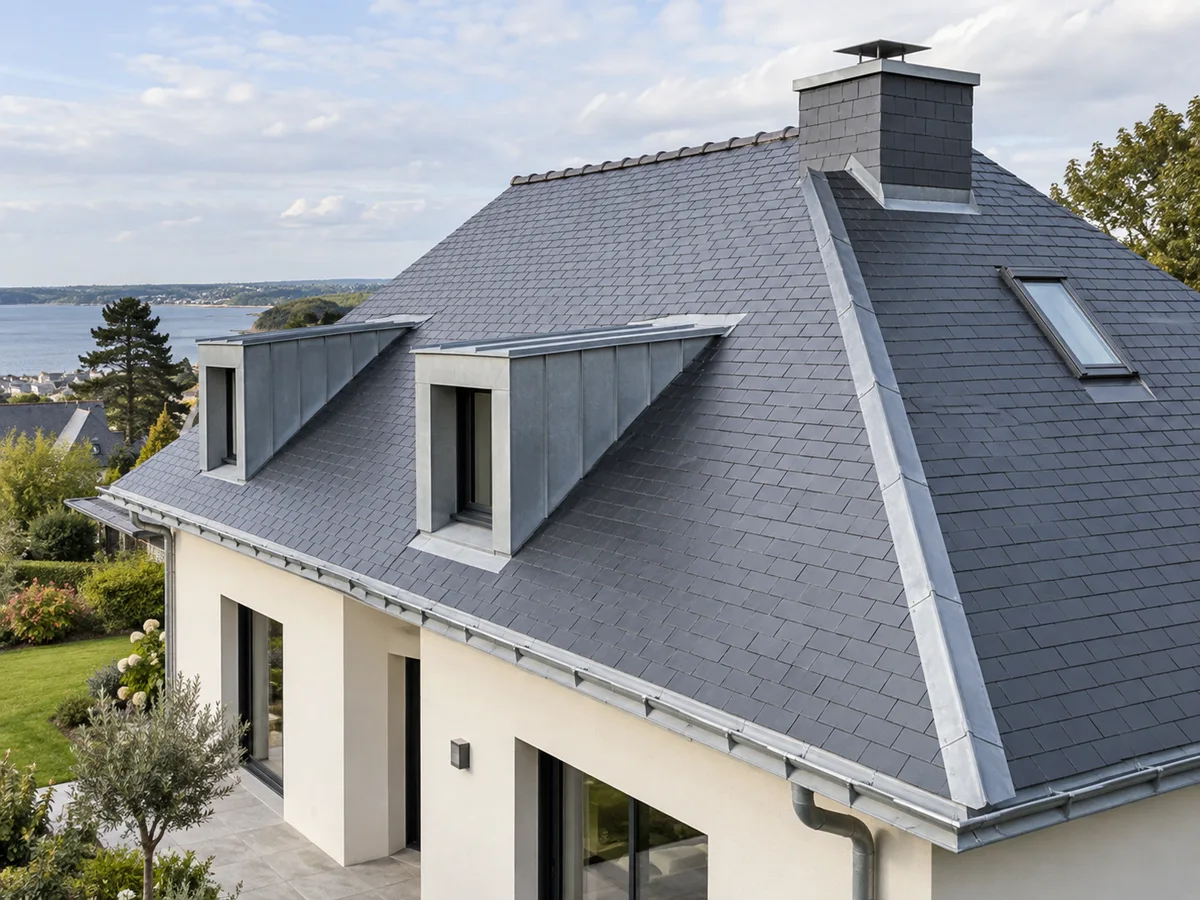


Profession illustrations — use the guides to prepare your own project.
Browse all profession guides →Questions before getting started
Do I need to know how to code?
No. Describe your project in the form, then view a proposal from your account. The manual editor lets you edit content without touching code. Your role still matters: provide accurate information and check that the presentation reflects your activity.
Can I redesign an existing website?
Yes. Choose redesign and provide the existing website address. The first version remains limited to four content pages, plus contact and legal pages. Redesign does not automatically copy all old pages: specify what must be retained.
Does the contact page count towards the four pages?
No. The quota is four content pages. Contact, legal notice and privacy pages are additional. You can devote the main pages to your business and services without sacrificing contact options.
Do I need a logo and photos from the start?
A logo is optional. Describe your visual preferences if you do not have one. Real images are useful for presenting your work. Only send material you have the right to use and avoid personal or confidential information in photos and documents.
Is a contact form enough to book appointments?
It receives an enquiry but does not automatically confirm a time slot. You must reply and agree arrangements with the visitor. If you use an external booking tool, specify that need instead of presenting a simple form as a synchronised calendar.
How long does it take to appear on Google?
There is no guaranteed timeframe. Publication does not automatically trigger appearance in search results. Check accessibility, page quality and discovery by the search engine. Indexing and ranking are separate; positions may change over time and with competition.
Does a custom domain automatically improve SEO?
No. A personal address may be more memorable and consistent with your brand, but it does not replace useful content, accessible pages and relevant links. Choose a domain primarily to make your business recognisable and easy to communicate.
What should I check before publishing?
Review contact details, opening hours, service area and every advertised service. Test calls, links and form submission with a clearly labelled test enquiry. Check the mobile version and complete the business information used for legal pages.
Your checklist before sharing the website
- Contact details and opening hours are correct.
- Every service reflects my actual business.
- Images do not present illustrations as real completed work.
- The menu, buttons and form work.
- The website remains readable and usable on my phone.
- I am sharing the published address, not a working preview.
Your business already has a story.
Let’s give it an address.
Describe your project, preview a first version and choose how to publish it.
Create my free website Back to top ↑